
Santos Energy Project – Remote Oil Wells Powered by 100% Renewable Energy

Location Cooper Basin, Australia

Industry Energy – Oil & Gas

Service Remote Area Power System (RAPS) with Solar + Battery Microgrid

132 kW
Remote Area Power System (RAPS) Capacity
36 kW
Solar PV Deployed
56 wells
Converted to Renewable Operation

Overview

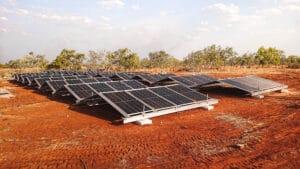
The Santos Energy Project highlights how renewable microgrids can power remote oil wells without reliance on diesel. By combining solar PV, battery energy storage, and microgrid control, Santos and CD Power achieved continuous, emission-free energy for crude oil beam pumps in the Cooper Basin.

Challenges

  • Reliable renewable power for remote crude oil beam pumps that require continuous operation.
  • Surplus solar and battery energy not effectively reused.
  • High capital costs for building 24/7 renewable systems in remote locations.

Solution

CD Power engineered and deployed a 132 kW Remote Area Power System (RAPS) combining solar PV, battery storage, and a microgrid controller. Delivered in collaboration with Kaefer and AGL, the solution converted 56 remote oil wells to full renewable power under Santos’ clean energy transition program.

  • EPC delivery strategy with Kaefer and AGL for multiple well conversions
  • Smart use of excess energy for communications, temperature control, and auxiliary loads
  • Modular, scalable design with common components for simplified logistics and training
  • Flexible financing options via leasing or PPAs

System Specifications

System Type
Remote Area Power System (RAPS)
Capacity
132 kW
Components
36 kW PV, 48 kVA inverter, microgrid controller

Results

100%
Renewable energy powering oil wells
56
Wells converted to renewable operation
0
Diesel fuel use and associated wellhead emissions
Increased
Operational uptime and efficiency
The project eliminated diesel use and associated emissions at wellheads, reducing Santos’ carbon footprint significantly. Operational costs fell through reduced fuel logistics, servicing, and site visits, while system reliability improved. The modular design also provides a scalable blueprint for renewable energy adoption across other remote industrial operations.

Related Case Studies

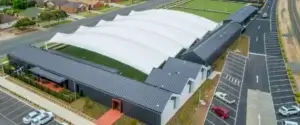
A Remote Energy Solution for Moama Bowling Club

Moama Bowling Club is a major regional hospitality venue that required a reliable and cost-effective energy system. The club faced the challenge of reducing energy bills, improving resilience during outages, and decreasing dependence on the electricity grid.

A hybrid microgrid was developed to meet these needs, combining solar generation, battery storage, and integration of the existing diesel generator. The result is a more stable and sustainable energy supply for the busy community facility.
An Energy Park Solution for Euston Bowling Club

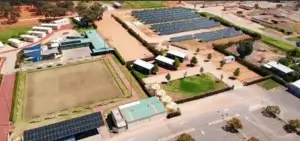
Euston Bowling Club is located on the edge of the electricity grid in rural New South Wales. The site faced some of the highest electricity tariffs in the state. As a large market customer, the club was also affected by significant Marginal Loss Factor and Distribution Loss Factor charges. These challenges made the site an ideal candidate for a more efficient and independent energy solution.

A hybrid microgrid was deployed to reduce reliance on the grid, improve resilience, and provide long-term energy security. The outcome is a stable and cost-effective energy supply for one of the region’s most important community hubs.

Over 38 years experience in delivering reliable power solutions across Australia.